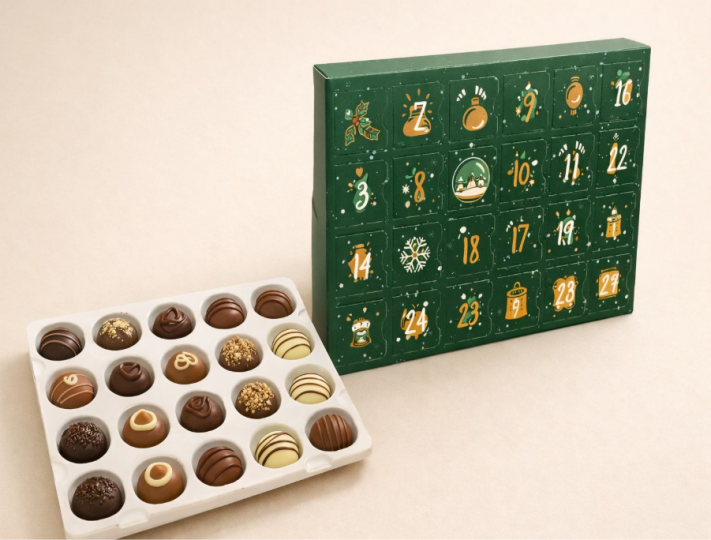
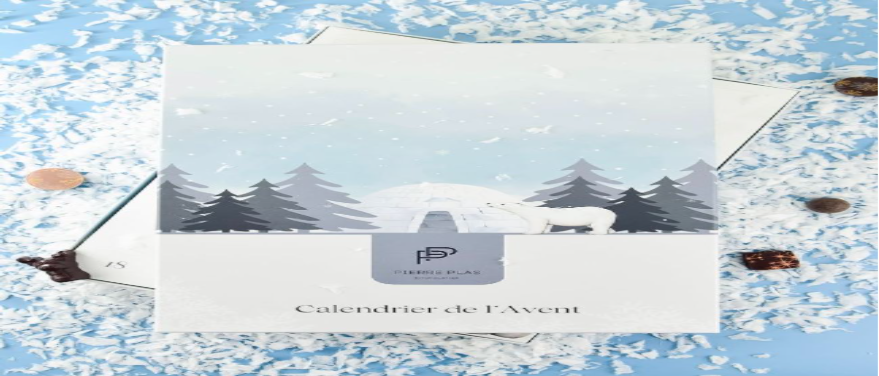
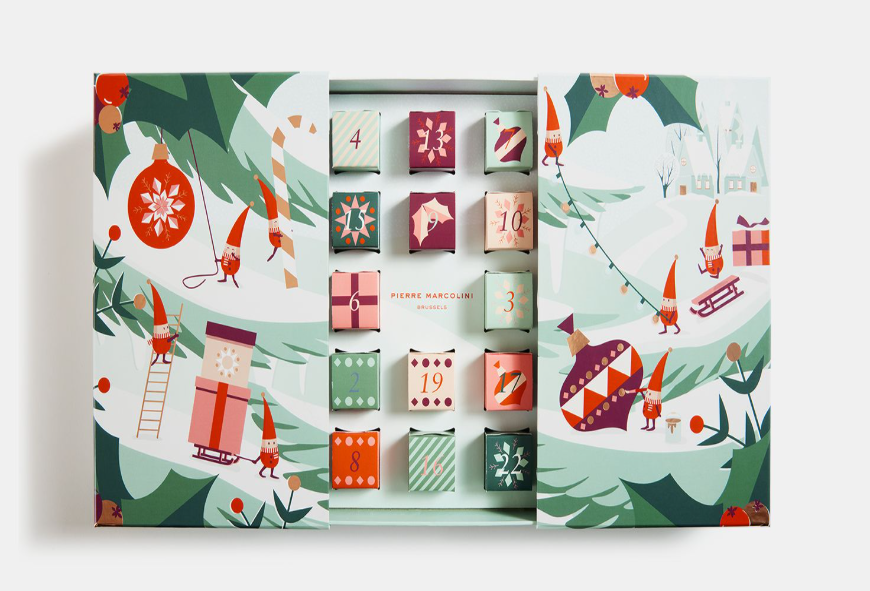
Advent calendars are a fast-growing product category across Europe, with particularly strong demand in Germany.
As brands continue to invest in seasonal packaging, sustainability is becoming a key decision factor.

Moving Away from Plastic-Based Designs
Traditional advent calendars often use plastic trays combined with cardboard, creating packaging that is difficult to recycle.
With stricter EU regulations and increasing environmental awareness, this approach is no longer future-proof.
The Role of Molded Fiber
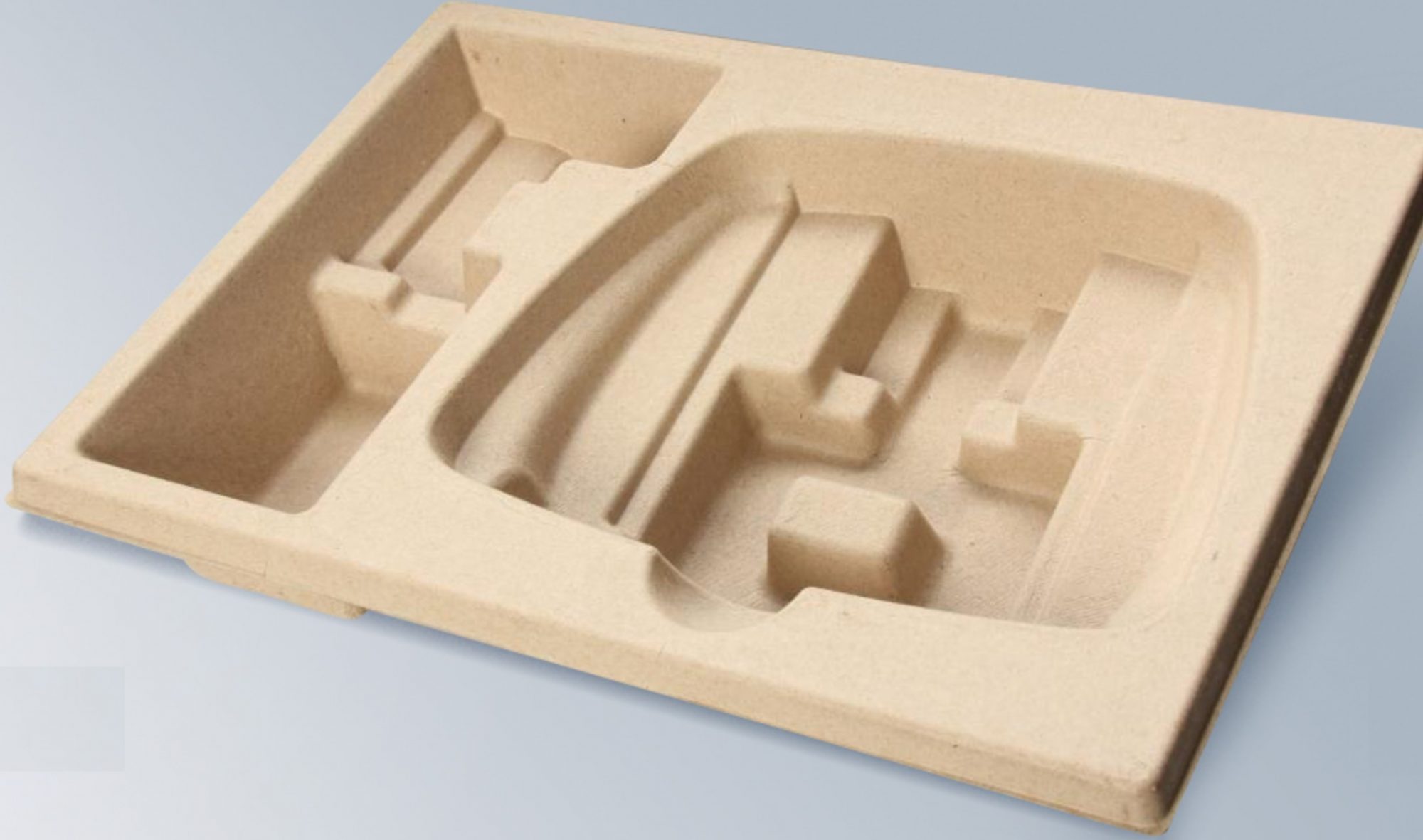
At EcoFiber, we develop advent calendar solutions using molded fiber made in the EU.
This material offers a strong alternative to plastic by being:
- Fully recyclable
- Plastic-free
- Suitable for food and non-food applications
It enables brands to reduce their environmental impact while maintaining high-quality packaging.
Designed for Performance and Experience
Molded fiber allows for custom cavities and protective structures, making it ideal for advent calendar formats across multiple industries:
- Food and confectionery
- Cosmetics and beauty
- Premium and lifestyle products
The result is packaging that is both functional and aligned with sustainability goals.
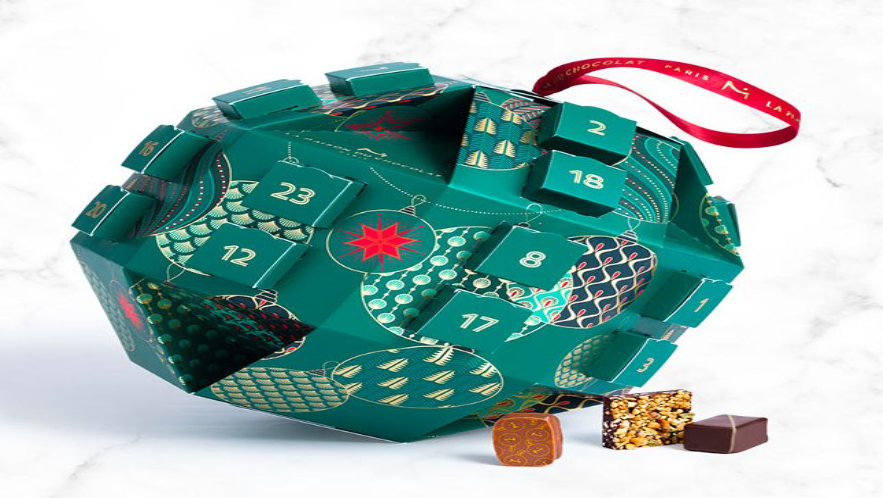
Supporting the Shift to Better Packaging
As the market evolves, brands are looking for solutions that meet both performance and environmental standards.
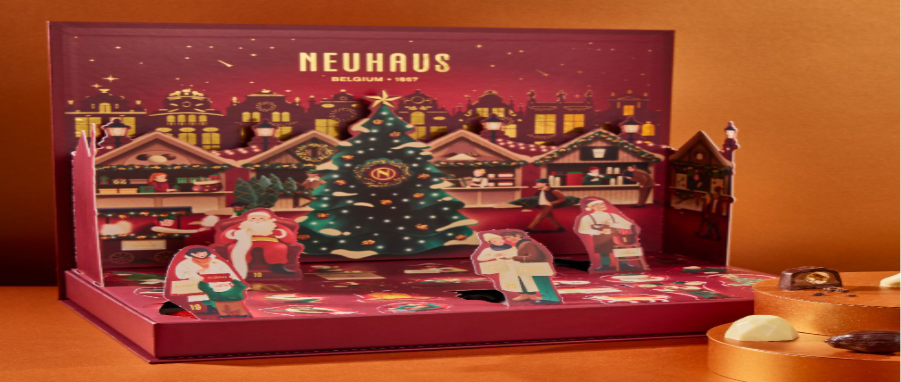
Molded fiber advent calendars provide a scalable way to replace plastic while delivering a premium unboxing experience.
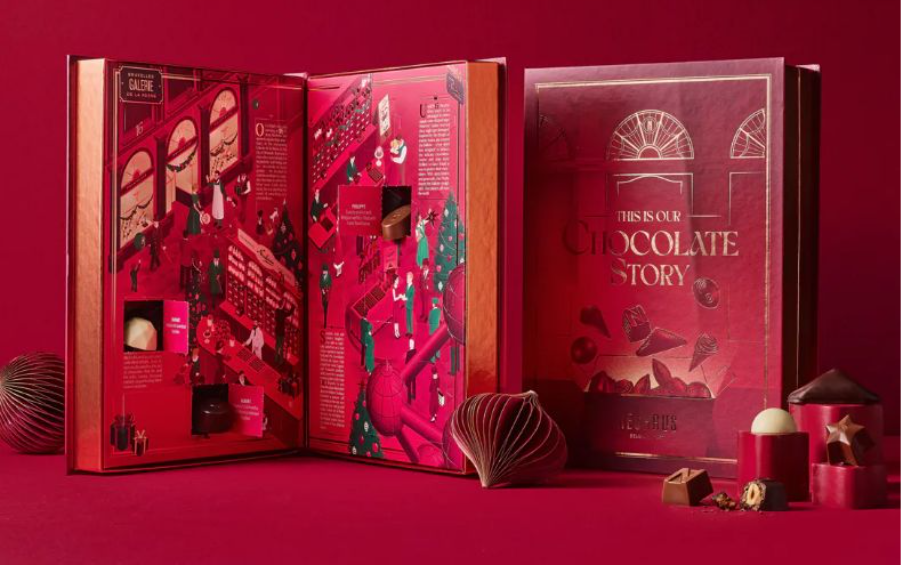
A Natural Step Forward
Advent calendars are more than a seasonal product — they are an opportunity to rethink packaging materials.
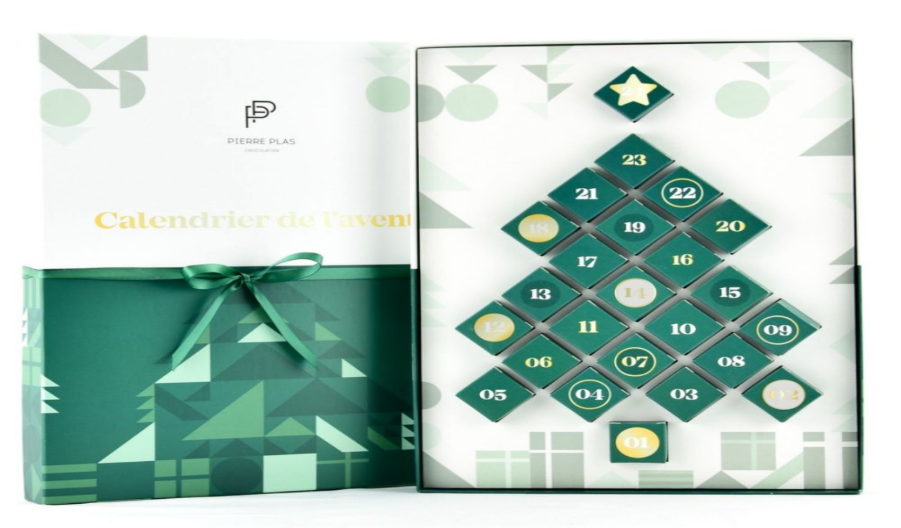
With molded fiber, brands can move towards solutions that are better for both the customer and the environment.If you’re exploring advent calendar concepts for 2026, let’s connect to info@pakeling.com